

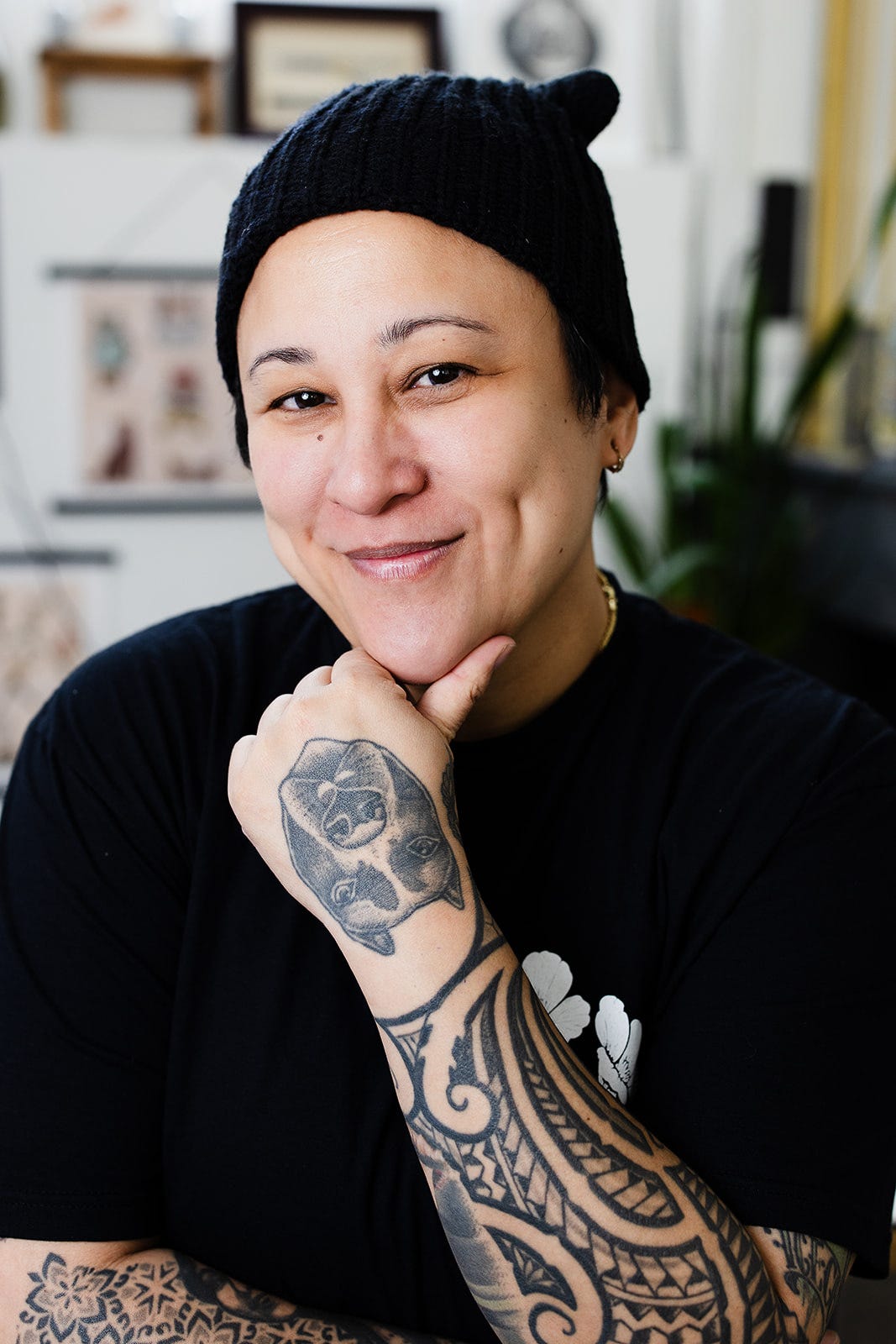
I was at a barbecue with my friend and her daughter. Her daughter reached over the table to grab a dish. I noticed her sleeve creep up, and saw the scars. I handled it completely wrong, the way you shouldn’t handle something like that. I was just filled with panic, anger, and confusion. She had a really good life, and I’ve known her since she was born. I couldn’t understand what would ever lead her to do something so permanent, because the scars were really bad.
She was self-harming.
I completely snapped. I went off on her, saying, you have it so good. You have no idea how rough it was for me growing up, how rough it was for your mom. And I, I just didn’t get it. She didn’t want to hear that, I didn’t understand her at all. And then she explained it. She was being bullied at school. It had nothing to do with her home life, she loved her mom, but it was a way to control her own pain.
That moment changed me. For me, it was profound, a 14-year-old completely reshaped my perspective. I couldn’t stop thinking about it. She wasn’t even old enough to get tattooed yet, but the experience stayed with me.
Later, a stranger reached out asking if I could tattoo over their scars. That led me down a deep research rabbit hole, learning about how skin regenerates over different scars, the technical aspects of tattooing scar tissue. But tattooing is one of those things, you don’t really learn until you do it.
I started offering 2 free scar coverups a week, which lasted for years. Sometimes 5 a week. Different types of scars: self-harm, domestic violence, burn scars, cancer port scars. I never asked about the story behind the scar unless someone wanted to share. My focus was on the skin, on the art, on helping it heal. I set reminders to follow up, 2 weeks, 4 weeks, 8 weeks, to see how the tattoo was settling.
After doing hundreds of scar coverups, I felt confident. I eventually charged for them, sometimes at half price, or discounted $100–$200. The biggest eye opener was the diversity - I saw every nationality, social class, age bracket, income bracket, and gender. Tattooing scars is the great equalizer.
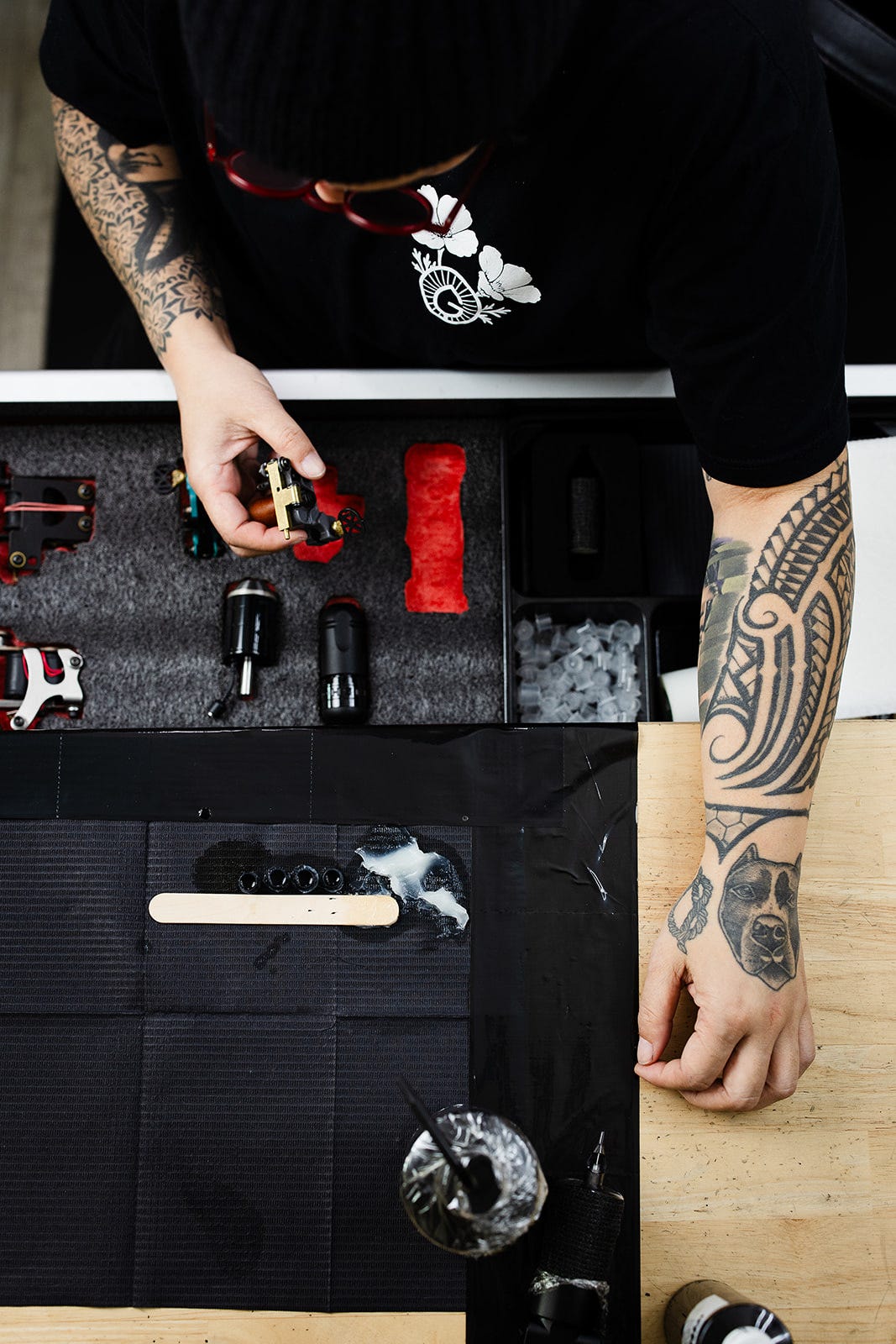
The studios I worked for were not supportive of this work, they didn’t want me offering free or discounted tattoos. I repeatedly heard “hey, this isn’t a charity” It blew my mind. At the first shop, I rented my own little room, so my work didn’t affect the shop’s income at all. It wasn’t on commission or percentage, so whether I tattooed anyone or not didn’t change what I paid.
I think the issue was that tattooers can be very old school. They felt offering free tattoos was “watering down the industry,” making it feel more like charity than business. Some of the comments, they’d say things like, “We don’t need all your mentally ill clients coming in here”, just stupid, judgmental stuff.
At another studio, I worked on a percentage. Because I was paying a cut, I couldn’t do free work, but I could offer discounts, $100 or $200 off, and that became a problem. The owner said I’d have to pay the difference. It didn’t make sense, and it was frustrating, because helping these clients brought me so much joy.
After everything I’d been through in these shops, the toxic experiences, the pushback over scar coverups, I just couldn’t imagine going to work somewhere else. Telling clients I couldn’t help them, or couldn’t give them a discount, simply wasn’t an option.
So I thought, fuck it, I’m just going to open my own studio. I didn’t plan on having other tattooers work with me, but it kind of happened naturally. They’re amazing, and every day we’re happy to see each other. It just worked out.
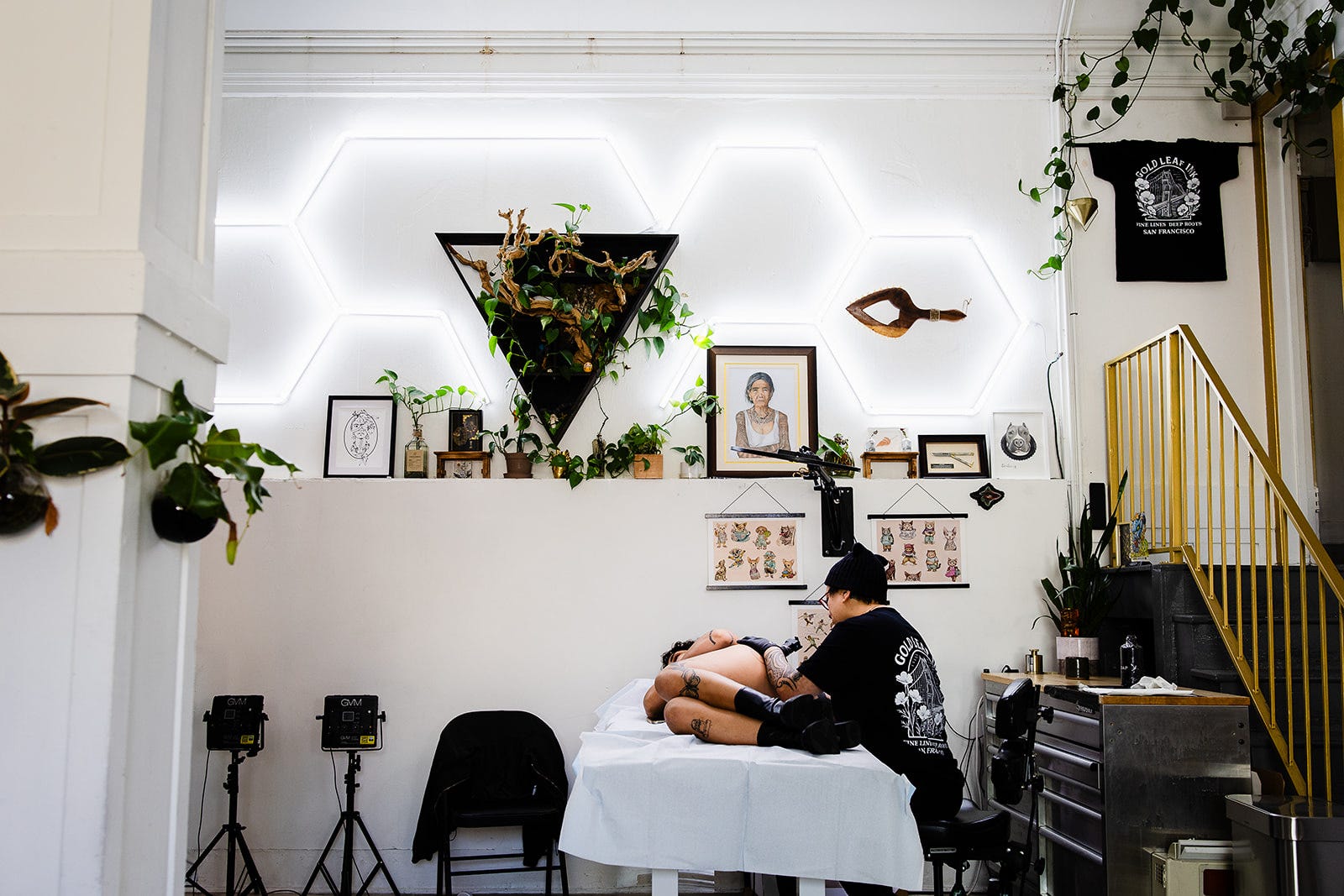
I moved into my current space a couple of years before the pandemic hit. Then the shop was closed for 9 months, and we didn’t get any breaks from the landlord. I was paying rent on Market Street the whole time. I tried to keep things afloat by making art at home, selling it online, and shipping it out. I also did flash passes, basically a coupon for a free flash tattoo once we reopened. It was hard, but it saved the studio from closing.
Once we reopened, people started coming back in, and business picked up. It’s definitely been busier since the pandemic, which is amazing.
Scar coverup work is incredibly powerful and meaningful, and that drives me every day. On my days off, I’ll still come in if it’s for a scar cover-up. I even went in on my birthday once because it was the only day the client was available, and it doesn’t feel like work at all.
I think part of the reason this work is starting to gain traction is visibility. 10 years ago, most people wouldn’t post a scar cover-up online, they worried about the lines not being perfect, the skin isn’t smooth, and a straight line might look wobbly or uneven. But when you zoom out, it’s not about perfection; it’s about how the client feels when they see the finished piece. That’s the real message that’s slowly spreading in the industry.
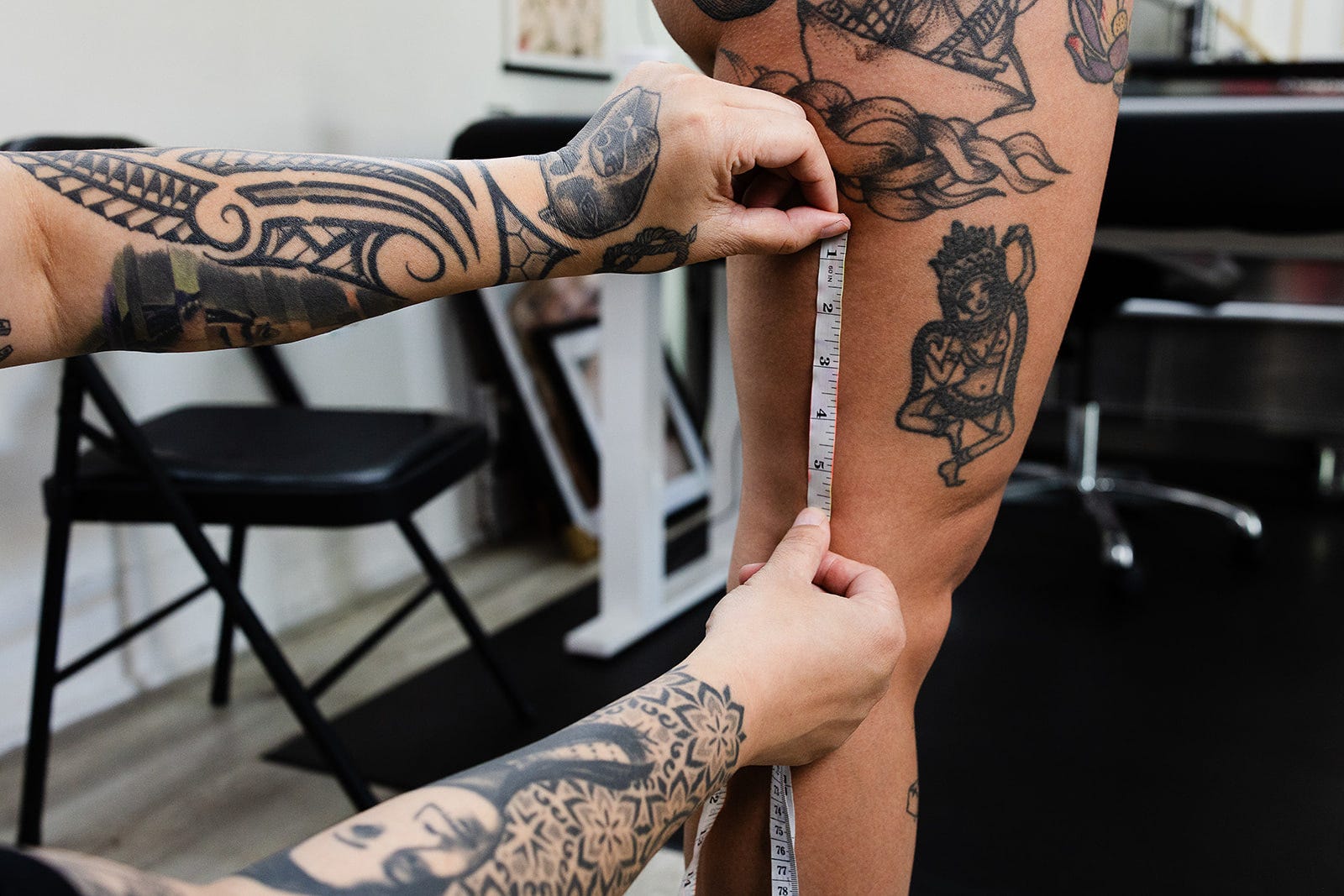
Traditionally, tattoo artists would charge more, or outright refuse, because scarred skin isn’t a “perfect canvas” for portfolios. Some just don’t know how scar tissue will react, and there’s very little education or experience around it. Others judge the person, thinking, “Those scars are insane. They must be crazy. I don’t want to work with them.” But after doing thousands of scar cover-ups, I’ve never encountered a client who was impossible to work with. That judgment is completely unfounded.
And the idea that tattoos over scars don’t last is a total misconception. Sure, a line might get a little distorted, but it heals just like any other skin, and when you look at the whole design, it’s perfect. That’s something people need to know: scar cover-ups not only work, they transform lives.
I had this 22 year-old client, very good-looking. He was a pool waiter in Vegas at one of the big hotels. In 120-degree weather he was still wearing long sleeves because he was so embarrassed of his scars. After we tattooed his forearms, he finally felt comfortable showing them and it changed his life.
Another client had self-harm scars on her inner thighs, which is a common area. She had a toddler who kept asking, “Mommy, what happened?” She told the child a dog scratched her. Fast forward, the child was now 4 and terrified of dogs. The mom realized the lie had impacted her child, and she was crying when telling me this while we tattooed her scars. She hoped that as her child grew older, she wouldn’t remember the dog story. It was another reminder of how personal and varied these journeys are.
There are so many reasons people cover their scars. Seeing their reactions when they first look in the mirror, the tears, there’s nothing else in tattooing that hits that emotional note. It’s intense and humbling. You’re holding their stories while performing your craft. But I channel all that energy into the planning, the art, and the follow-ups, making sure everything heals properly.
One client had a brain cancer port scar that kept reopening. When he was finally in the clear, he wanted angel wings tattooed over it. His best friend was there. They both started bawling. The whole shop was emotional, we were so happy for him. He finally didn’t have to see that scar anymore. It was incredibly powerful.
Another woman, she had legally changed her name and her child’s name 3 times, she’d moved from the East Coast, and was basically in a witness-protection-like situation from domestic violence. Her ex had tried to kidnap their child and had physically abused her. She always wanted a hip tattoo, and he’d always said to her, “That’s my leg. You’re not tattooing your body because I own it.” She finally got a flowing floral tattoo down her hip and thigh. When she looked in the mirror, she broke down in tears because she was finally reclaiming her own body. The whole shop was overwhelmed, but in the best way, celebrating her.
Tattooing might sound like “drawing silly cartoons on people,” but these experiences show me it’s so much deeper. It’s what makes me want to do this forever. It motivates me to take care of my own body so I can serve people like this for years to come.
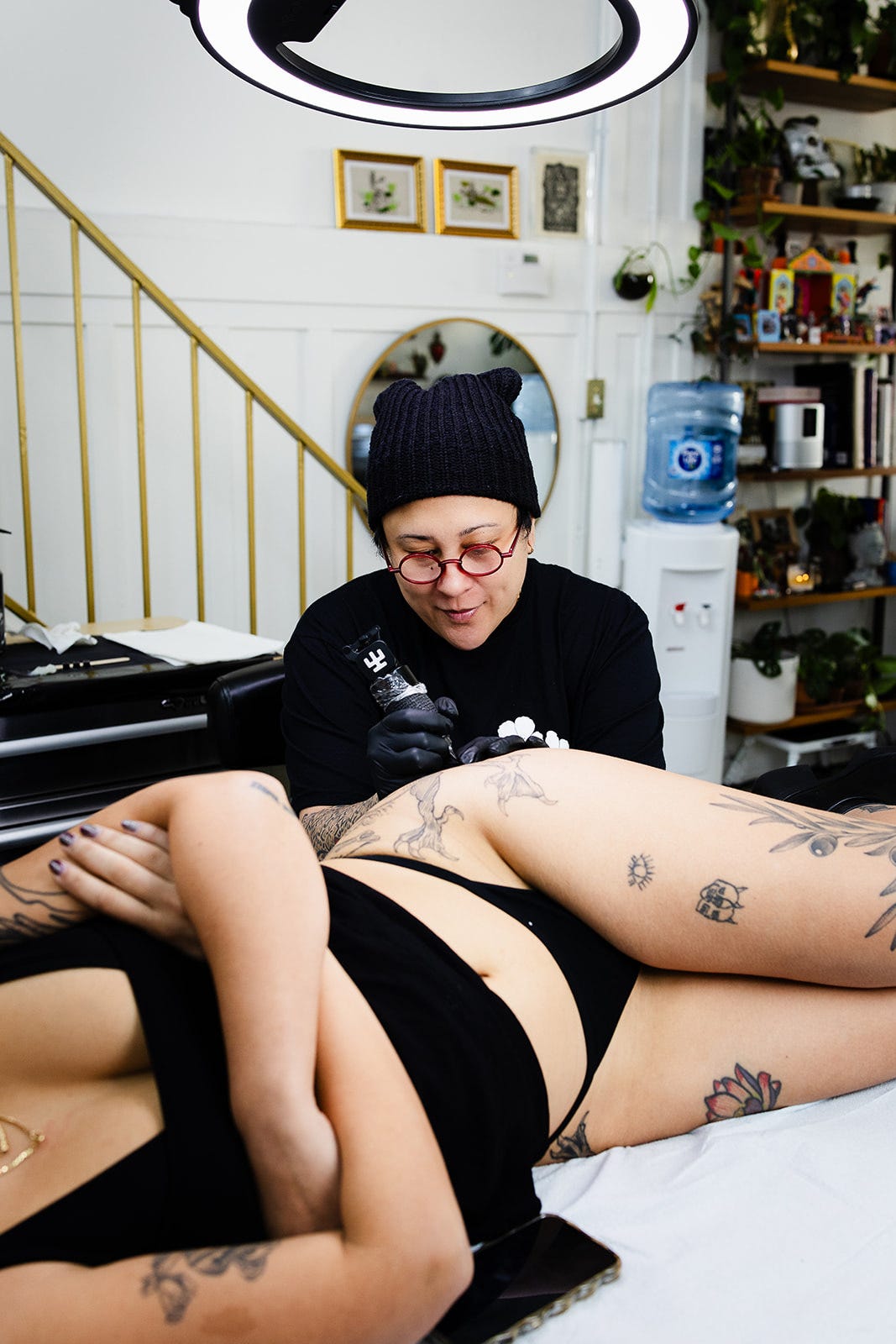
What I love most is watching people leave the shop differently than they walked in. Shoulders back, sleeves rolled up. When they first look in the mirror, you can feel their energy change and confidence grow. That’s the most meaningful thing about tattooing for me.
With Gen Z and Gen Alpha, everything’s changing. They’re unapologetic, outspoken, and incredibly informed. I don’t even have a TikTok, but one of the scar coverups I did got posted, and suddenly I started hearing from clients all over, Tennessee, Oklahoma, Indiana, Alabama, flying to California for top surgery scar coverups, gender-affirming care. They would never have dared do that in their small towns.
A lot of these clients’ workplaces didn’t even know their gender identities. Many had never been to the West Coast, let alone California, and they were amazed. “This is incredible,” they’d say. “We saw gay flags everywhere, it’s like gay Disneyland.” Just seeing them realize they didn’t have to live the way they’d been forced to, getting out of their tiny towns because of something they saw online, it blew my mind.
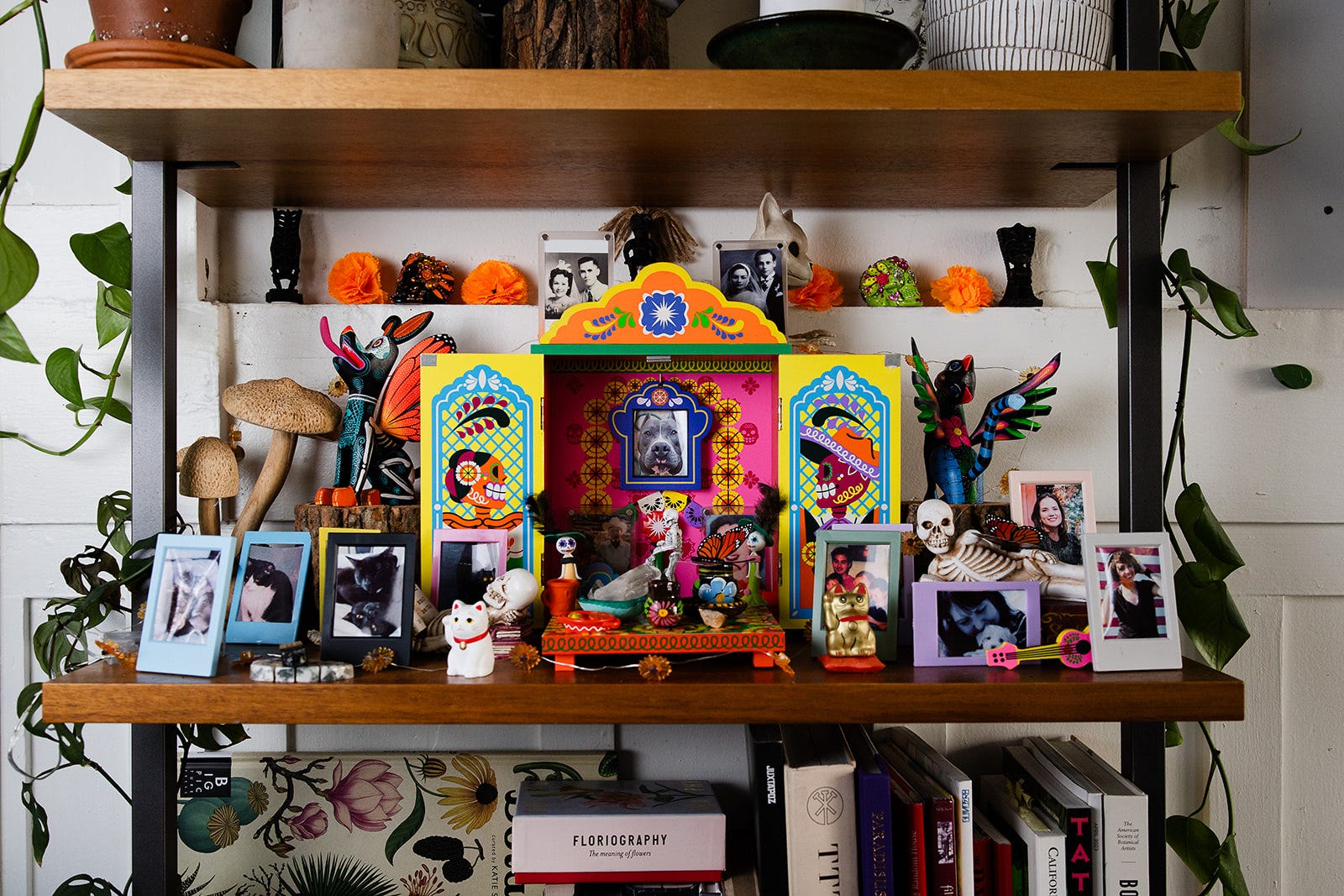
Tattoo shops back home would refuse them outright. But here, they could finally have a tattoo over their chest and feel more comfortable in their own skin. That, to me, is huge. I just want everybody to know that’s possible.
I barely post on Instagram anymore. They’ve suspended my account several times for posting scar cover‑ups. At first, they would just send warnings. Then one day, my account was gone. Completely gone. I had to go through this whole appeals process, filing forms, pleading my case to some independent review board outside of Instagram, and their argument was that by posting photos of scars, even healed scars with tattoos over them, I was encouraging self‑harm.
Which is insane, because it’s the opposite of that. This work is about healing.
They also told me I couldn’t post nipple reconstruction tattoos. Specifically, women’s nipples. They said I could post men’s nipples, but not women’s. That’s the level of logic we’re dealing with. In 2026, women’s bodies are still being treated like something dangerous that needs to be hidden. Meanwhile, this is medical, restorative tattooing. It’s helping people feel whole again after surgery, after trauma.
For women who’ve had mastectomies, the color the hospitals use is one shade for everyone, and it’s this awful orange. It’s not even a natural tone, just orange. I’ve never seen anything like it. And that’s where tattooing comes in. It’s such an important part of reclaiming your body. Giving someone a color, a shape, a design that actually feels like them, it’s huge. It’s not just aesthetics. It’s identity, it’s healing, it’s saying, this is my body again.
All of this has made me realize I can’t rely on social media to tell this story. I’ve been meaning to update my website and put everything there, all the scar cover‑ups, all the work they won’t allow me to show, and then just leave a pinned post directing people to it. Because people deserve to know this exists.
The irony is, most of my scar cover‑up clients don’t come from Instagram anyway. They come from word of mouth. Someone tells a friend, or a partner, or a sibling. They pass it along quietly. That kind of trust means more than anything. It means the work is reaching the people who need it.
I’ve thought about leaving San Francisco, opening down the Peninsula or even the East Bay, where rent is cheaper, but I love this city too much. I’ve been here since the early ’90s, and while it’s changed a lot, I believe it will come back again.
It’s hard to watch places you love disappear, Flax on Valencia, where I used to spend hours in the early 2000s, now gone, along with Blick and the Arch store at CCA, but cities pendulum. Rents have dropped a lot in the last few years with companies relocating, and I hope they continue to come down so more creatives and artists can come back, bringing tangible goods and life to the city again.
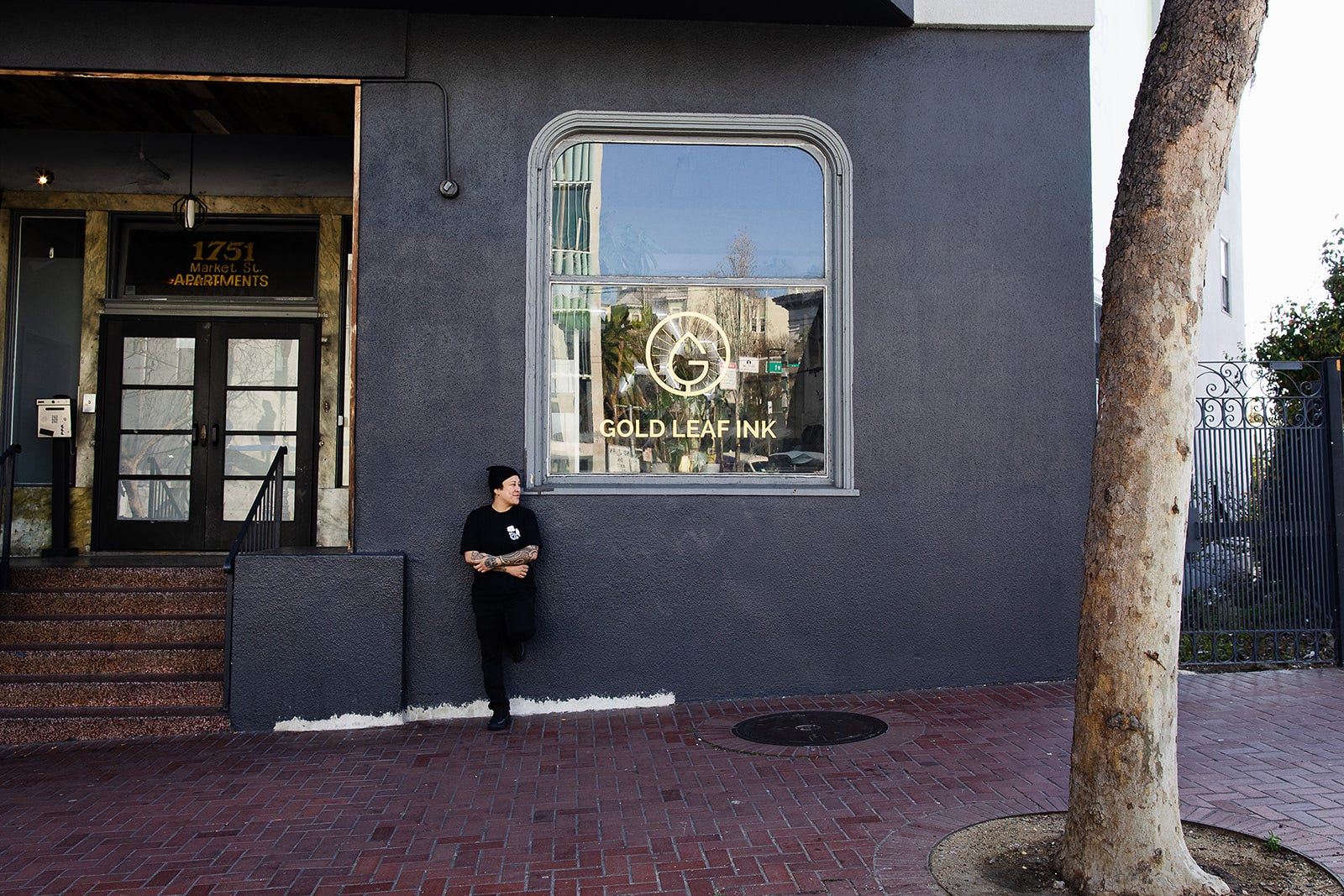
San Francisco has always been a weird, creative place full of artists, dreamers, and people who care about each other, and I’m excited to see what people continue to build here.
Regina Estrada, Gold Leaf Ink
This piece was edited for length and clarity.
Photography by Lila Gray Photography
So inspiring. Regina, you rock! I hadn't realized that tattoo art could be a form of healing from trauma. I'm very proud of you and your artistic journey!!!